Complete Guide 2026
Prevention, detection and professional extermination
The Quebec winter is not only an ordeal for humans. Every year, when temperatures drop, snow accumulates, and outdoor food sources become scarce, rodents change their behavior. Mice and rats actively seek warmth, shelter and food, and residential, commercial and institutional buildings become prime targets.
In 2026, this phenomenon is amplified by more unstable winters, marked by alternating thaws and intense cold, favouring the repeated movements of rodents to inhabited structures. For owners, property managers, condominium syndicates and merchants, understanding these dynamics is no longer a luxury, but a necessity.
This in-depth guide, designed for Extermination PRO Nature, aims to provide a clear, structured and concrete vision of the problem of rodent infestations in winter in Quebec. It addresses the species involved, the causes, the warning signs, the real risks, prevention strategies, effective control methods and legal responsibilities, while highlighting the importance of a rigorous and sustainable professional intervention.
Why winter 2026 is a critical time for rodents in Quebec
The behavior of rodents is strongly influenced by climatic conditions. When the outside temperature drops below freezing, their survival depends on their ability to access protected environments. Heated buildings not only provide a stable temperature, but also potential access to constant food supplies.
In 2026, several factors will accentuate this phenomenon. Extreme cold episodes often occur after periods of thaw, which disrupts the rodents’ natural landmarks. These variations encourage populations to multiply intrusion attempts, sometimes repeatedly, until they find an exploitable flaw. A simple crack in a foundation, a worn door seal, or a poorly sealed cable passage can be enough to allow a mouse to enter.
In addition, there is increasing urbanisation and the density of buildings. Residential, commercial and industrial areas offer a complex network of underground passages, crawl spaces and technical ducts that facilitate the movement of rodents between the outside and inside of buildings.
The main rodents responsible for winter infestations
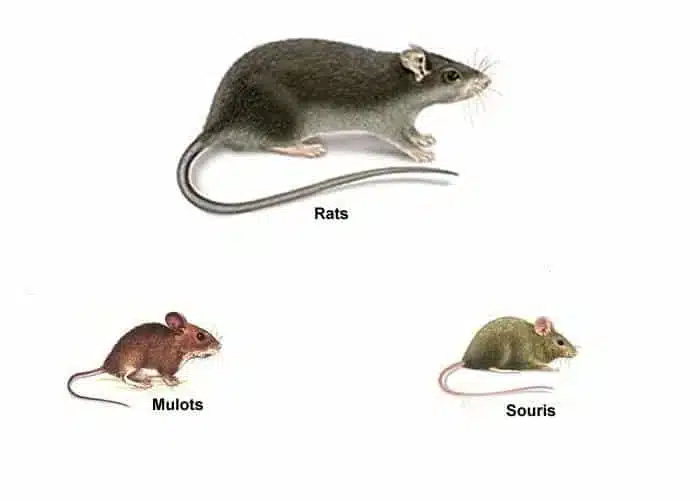
The house mouse
The house mouse is by far the most frequently encountered in Quebec homes. Small in size, it is capable of entering a building through an opening of less than one centimetre. Its ability to adapt is remarkable, and its rapid reproductive cycle allows an infestation to grow in just a few weeks.
In winter, it favors walls, ceilings, pantries and storage areas. Its discretion often makes its presence difficult to detect at first.
The deer mouse and the field mouse
These rodents are most often associated with semi-rural environments, cottages, and garages. In winter, they migrate to buildings located near wooded areas or fields. Although they are sometimes perceived as less of a problem, their presence can lead to damage similar to that caused by house mice.
The brown rat
Less common in single-family residences, the brown rat is a major issue in multi-residential buildings, food stores and industrial facilities. Larger and more robust, it is capable of causing significant structural damage and poses increased health risks.
Accurate species identification is a key component of successful intervention, as each type of rodent requires a specific approach to control and prevention.

Why do infestations increase in winter
The increase in winter infestations is based on a combination of biological and environmental factors. The scarcity of outdoor food sources is pushing rodents to explore new territories. Household waste, food warehouses and even animal feeders are becoming major points of attraction.
In addition, Quebec buildings, although adapted to the cold, often have flaws that are invisible to the naked eye. Freeze-thaw cycles cause micro-cracks in foundations and joints, creating as many potential entry points. In condos, rodents take advantage of common party walls and ducts to move from one unit to another, making it difficult to manage the problem when it is not dealt with in a coordinated manner.
Recognizing the Signs of a Rodent Infestation
Early detection is a key factor in limiting the size of an infestation. Some signs are discreet, others much more obvious, but all deserve immediate attention.
Droppings are often the first clue that can be observed. Their presence along walls, behind appliances or in cabinets indicates regular routes. Noises at night, such as scratching or moving in walls and ceilings, are also characteristic of active activity.
The urine smell, sometimes described as musky, usually appears when the infestation has been established for some time. Oily marks left by the rubbing of the coat along the surfaces are another indicator of advanced infestation. Finally, the discovery of nibbled food, perforated packaging or damaged insulation almost always confirms the presence of rodents.
Real risks to health and buildings
Rodents are not just nuisances. They represent a well-documented health and material risk. Their feces, urine and saliva can contaminate surfaces and food, increasing the risk of pathogen transmission. In commercial settings, including restaurants and grocery stores, this contamination can lead to temporary closures and regulatory penalties.
On the material level, rodents are constantly gnawing to wear down their incisors. Electrical wires, conduits and insulation are particularly vulnerable, increasing the risk of fire and energy loss. In the long term, an uncontrolled infestation can compromise the health and value of a building.

Winter prevention of rodent infestations
Prevention remains the most effective and cost-effective strategy in the long term. It is based on a comprehensive approach that combines maintenance, exclusion and surveillance.
General maintenance plays a central role. Rigorous waste management, with airtight bins that are regularly cleaned, considerably reduces the attractiveness of a site. Indoors, storing food in sealed containers and cleaning storage areas frequently limits accessible food sources.
Equally crucial is the control of entry points. A thorough inspection of foundations, window frames, door bottoms and cable penetrations helps identify areas at risk. Sealing with rodent-resistant materials, such as copper netting or steel wool combined with a suitable sealant, is an effective barrier.
Outdoors, the layout of the land has a direct influence on the likelihood of infestation. Piles of wood, dead leaves and brush should be kept away from the walls. Proper moisture management around the foundation also helps to make the environment less hospitable to rodents.
In co-ownership, prevention requires close coordination between the syndicate and the co-owners. Periodic inspections and clear communication make it possible to act quickly as soon as the first signs appear.
Methods of rodent control in winter
Control methods vary depending on the size of the infestation and the type of building. Mechanical traps can be effective in isolated cases, but their use requires constant monitoring and understanding of rodent behavior.
Bait and rat poison, although effective, carry risks when used without professional supervision. Improper installation can endanger children, pets, and non-target wildlife.
The professional approach adopted by Extermination PRO Nature is based on a precise diagnosis and an integrated strategy. Enhanced inspection helps identify the species present, entry points, and areas of activity. Based on this data, a personalized treatment plan is developed, combining exclusion, secure devices and preventive recommendations. Follow-up, which is often neglected, is essential to ensure the long-term effectiveness of the intervention.
When to call on Extermination PRO Nature
Some situations require a quick and professional intervention by an exterminator in Montreal. The persistence of the signs despite the installation of traps, the presence of rodents in condominiums or in a business, and the appearance of significant property damage are all indicators that a homemade solution is no longer enough.
Extermination PRO Nature stands out for its structured approach that respects the standards in force. The process begins with a comprehensive assessment, followed by a clear and documented action plan, and then support until the issue is fully resolved. This methodology reduces the risk of recurrence and provides lasting peace of mind.
Legal responsibilities in Quebec regarding rodents
In Quebec, the presence of rodents in significant quantities can engage the liability of the owner of a building. Municipal by-laws and sanitation standards require that buildings be kept in a pest-free state. In co-ownership, the syndicate is generally responsible for the common portions and the coordination of interventions, while the co-owners must ensure the maintenance of their unit and report any infestation.
Ignoring an infestation can lead to penalties, litigation, and a deterioration in the relationship between owners and occupants. A quick and documented intervention is often the best protection against these risks.
Signs of Infestation and Emergency Level Reference Table
| Observation observed in the building industry | Probable interpretation | Level of urgency | Recommended action |
|---|---|---|---|
| Some isolated excrement | One-time activity | Moderate | Monitoring and prevention |
| Frequent droppings along walls | Established routes | High | Professional inspection |
| Regular nighttime noises | Active activity in the structure | High | Rapid response |
| Nibbled food and packaging | Direct access to reserves | High | Comprehensive Control Plan |
| Persistent urine smell | Infestation installed | Very high | Immediate extermination |
| Rodent visible in broad daylight | Large population | Very high | Urgent call to a professional |
Frequently Asked Questions about Winter Rodents in Quebec
Why do mice enter homes in winter
They mainly seek warmth and food. Heated buildings provide a stable environment that helps them survive during periods of intense cold.
How to distinguish an infestation from an isolated rodent
The frequency and diversity of the signs are decisive. Repeated droppings, regular nighttime noises, and visible damage usually indicate an infestation.
Are household traps enough?
They can help in minor situations, but they do not solve structural problems or widespread infestations. Without exclusion and follow-up, the risk of recidivism remains high.
Are rodent repellent products dangerous
Some are, especially when they are misused. Professional installation in secure devices significantly reduces the risks to occupants and animals.
Who is responsible in co-ownership
The syndicate generally manages the common areas and the coordination of interventions, while the co-owners must keep their unit in good condition and report any infestation.
How long does it take to eliminate an infestation
The duration varies depending on the severity, but a comprehensive professional approach often includes several weeks of treatment and follow-up.
When is the best time for a preventive inspection
The end of summer and the beginning of autumn are ideal, with monitoring in the middle of winter to prevent intrusions related to extreme cold.
Conclusion
Rodent infestations in winter in Quebec are neither anecdotal nor inevitable. In 2026, in the face of demanding climatic conditions and increasingly complex buildings, prevention and professional intervention are more essential than ever.
Extermination PRO Nature offers a rigorous approach, based on analysis, prevention and monitoring, to ensure the safety, health and sustainability of buildings. Acting early, being informed and surrounding yourself with competent professionals remains the best strategy to get through the winter without rodents.

